Blazor vs React: Which One Should You Actually Use?
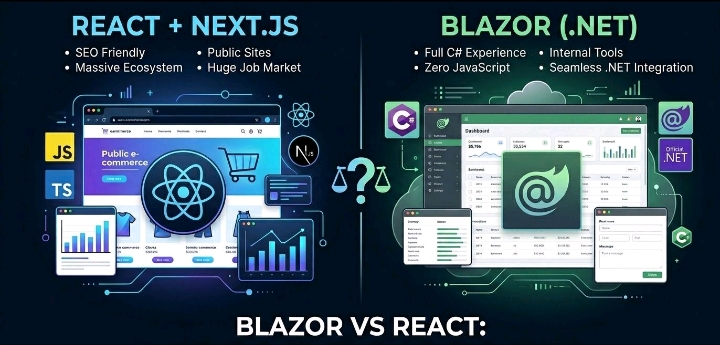
React dominates the frontend world with 40%+ market share. Blazor is Microsoft's bet on WebAssembly — letting C# developers build interactive UIs without writing JavaScript. But which one wins for your next project? We compare performance, ecosystem, SEO, and developer experience head-to-head.
Head-to-Head: Blazor vs React
| Feature | Blazor | React |
|---|---|---|
| Language | C# / .NET | JavaScript / TypeScript |
| Initial Load | Slow (WASM download) | Fast |
| SEO Support | Limited (WASM) | Excellent (Next.js SSR) |
| Ecosystem | Growing (.NET) | Massive (npm) |
| Learning Curve | Easy (for .NET devs) | Moderate |
| Job Market | Niche | Dominant |
| Community Size | Small | Huge |
Advantages
1. Performance & Initial Load
How Blazor Works
Blazor WebAssembly downloads the .NET runtime (~2–10MB depending on .NET version and trimming) on first load, then runs C# code in the browser. This causes a noticeably slow first paint. Blazor Server avoids this by running UI logic on the server over SignalR — but introduces latency on every interaction.
How React Works
React ships a JavaScript bundle (typically 40–150KB gzipped). With code splitting and lazy loading, initial load is fast. Paired with Next.js, you get SSR/SSG — pages are pre-rendered and served as static HTML, making Time to First Byte near-instant.
Winner: React
React's smaller bundle and mature optimization ecosystem give it a structural performance edge for most use cases.
2. Developer Experience
Blazor DX
- →Full C# — no context switching
- →Strong typing out of the box
- →Seamless .NET library access
- →Great for enterprise .NET teams
React DX
- →JSX feels natural after a week
- →TypeScript support is excellent
- →Massive tooling ecosystem
- →Hot reload, DevTools, etc.
It Depends on Your Background
If your team lives in .NET, Blazor is a joy. If you're hiring broadly or building for the open web, React's ecosystem is unmatched.
3. SEO Capabilities
Blazor SEO — The Problem
Blazor WebAssembly renders entirely in the browser. Google's crawler cannot execute WebAssembly, so it sees an empty HTML shell — similar to the old client-side React problem before SSR became standard. Blazor Server is better, but requires a persistent server connection and doesn't scale as elegantly.
React + Next.js SEO
React paired with Next.js gives you SSR, SSG, ISR, dynamic meta tags via the Metadata API, automatic sitemap generation, and OG image generation — all in one framework. Crawlers receive fully rendered HTML instantly.
Winner: React (Next.js)
For SEO-critical apps — blogs, marketing sites, e-commerce — React with Next.js is the clear choice. Blazor is not designed for public-facing SEO.
4. Ecosystem & Libraries
2.3M+
npm Packages
React ecosystem
22M+
Weekly Downloads
React on npm
Growing
Blazor NuGet
But much smaller
The Reality
Whatever you need — charts, auth, forms, animations, drag-and-drop — React has a battle-tested library for it. Blazor's NuGet ecosystem is growing but often requires custom implementations for common UI patterns.
5. Job Market & Career
Global Job Demand (2025)
Job listing estimates are approximate and vary by platform and date.
Winner: React — by a wide margin
React skills are portable across startups, enterprises, and freelancing. Blazor is valuable in Microsoft-stack enterprises but niche elsewhere.
When to Use Each
Choose Blazor If:
- ✓Your team is .NET-first
- ✓Building internal enterprise tools
- ✓SEO is not a concern
- ✓You want full C# stack
- ✓Working in a Microsoft ecosystem
Choose React If:
- ✓SEO matters to your project
- ✓You need a large talent pool
- ✓Building public-facing products
- ✓Want maximum library support
- ✓Freelancing or open market
Key Takeaways
React wins on reach — larger ecosystem, more jobs, better SEO story.
Blazor wins for .NET teams — zero JS context switching, strong typing, full .NET access.
SEO is React's domain — Blazor WASM is nearly invisible to crawlers without extra workarounds.
Both are production-ready — the right choice depends on your team, not hype.
Ready to Pick Your Stack?
Already using .NET? Blazor is worth exploring for internal tools. Building for the open web? React + Next.js remains the most battle-tested choice in 2025.
Keep reading.
More from Web Development
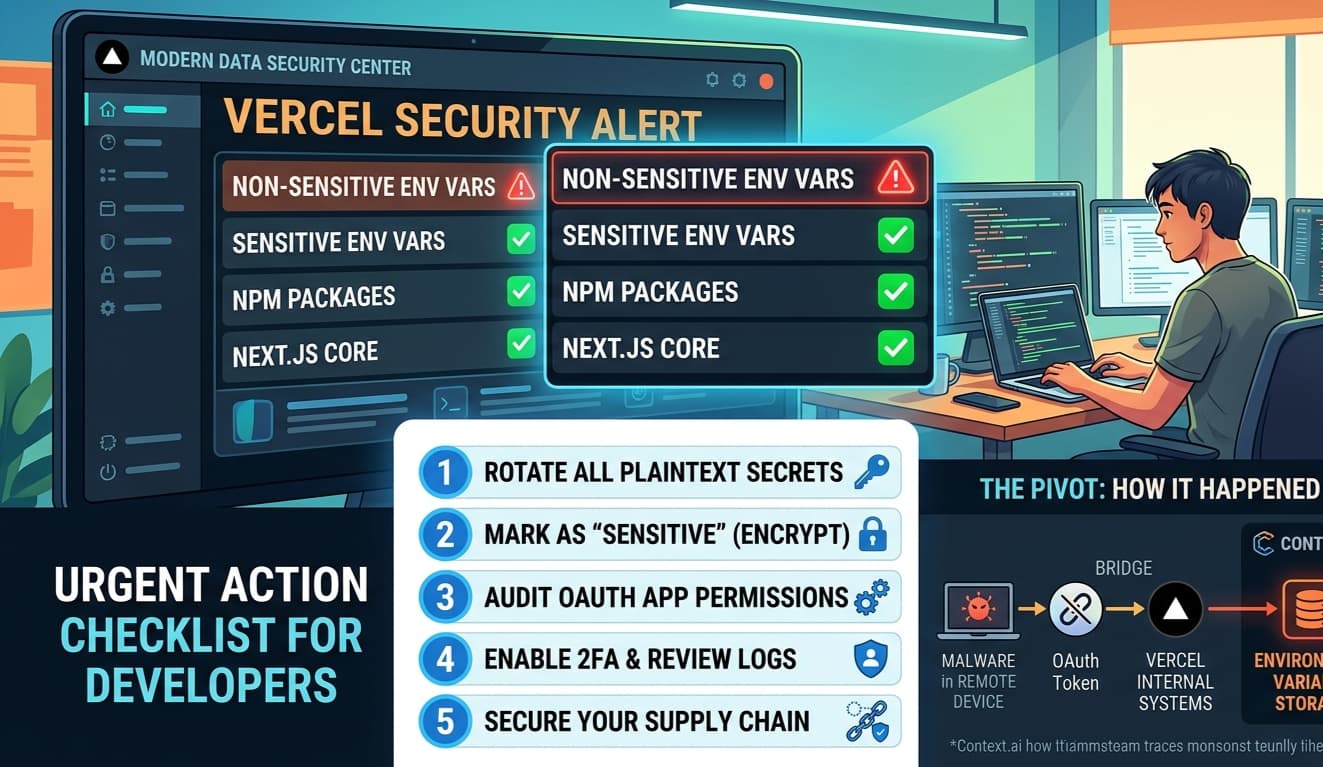
The Vercel Breach — What Every Next.js Developer Needs to Do Right Now
On April 19, 2026, Vercel confirmed a security breach. If you're a Next.js developer with projects on Vercel — and you almost certainly are — this direc...
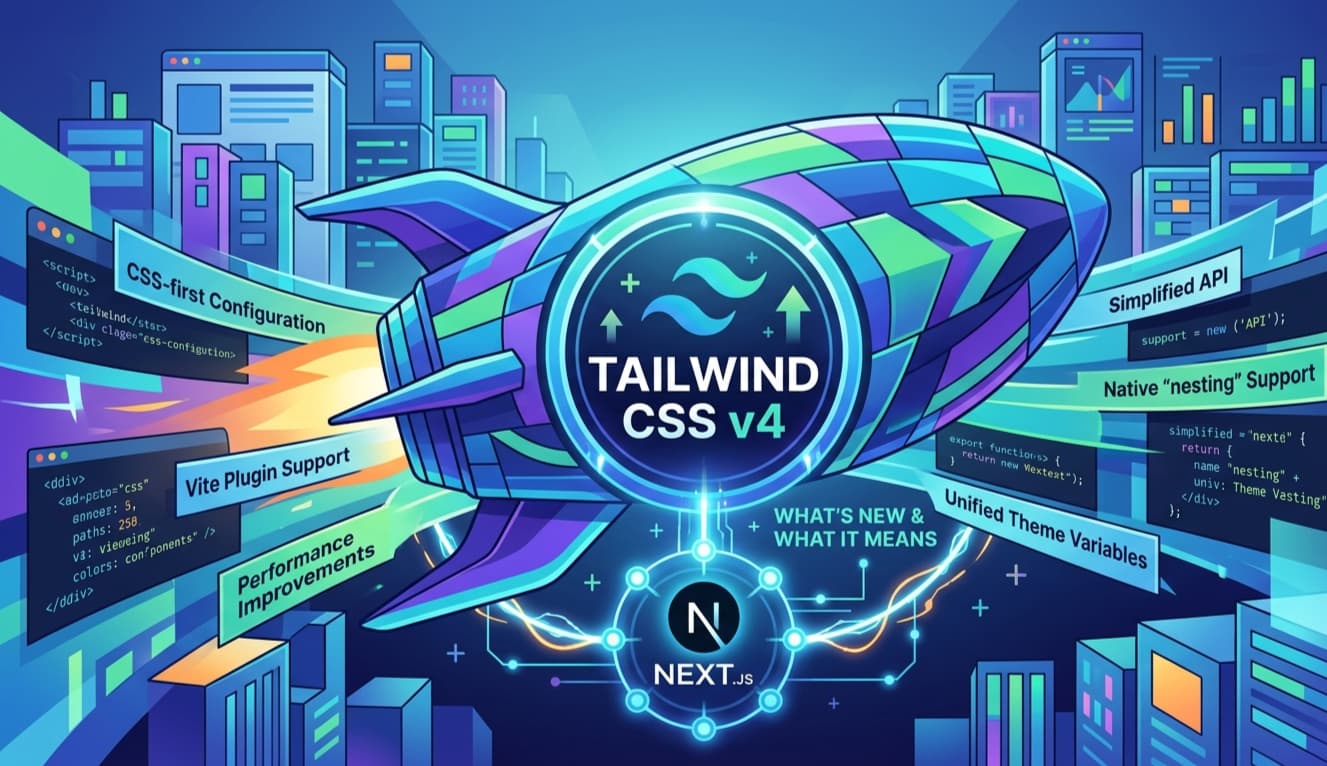
Tailwind CSS v4: What Actually Changed (And What It Means for Your Next.js Project)
Tailwind CSS v3 had a good run. Configure your theme in tailwind.config.js, point the content array at your files, done. Then Tailwind CSS v4 shipped in...
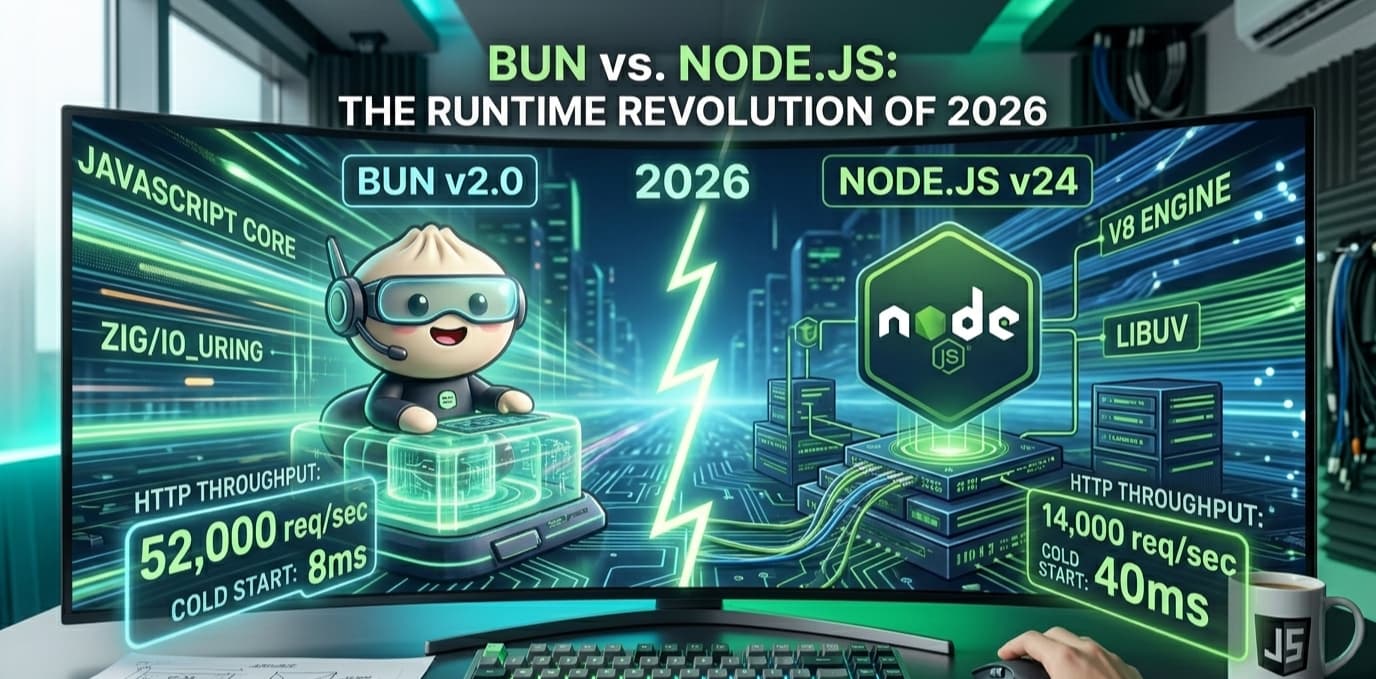
Bun vs Node.js: The Runtime That Changes Everything in 2026
Node.js has run the server-side JavaScript world for fifteen years. It powers everything from startups to Fortune 500 backends. Then in 2023, Bun arrive...